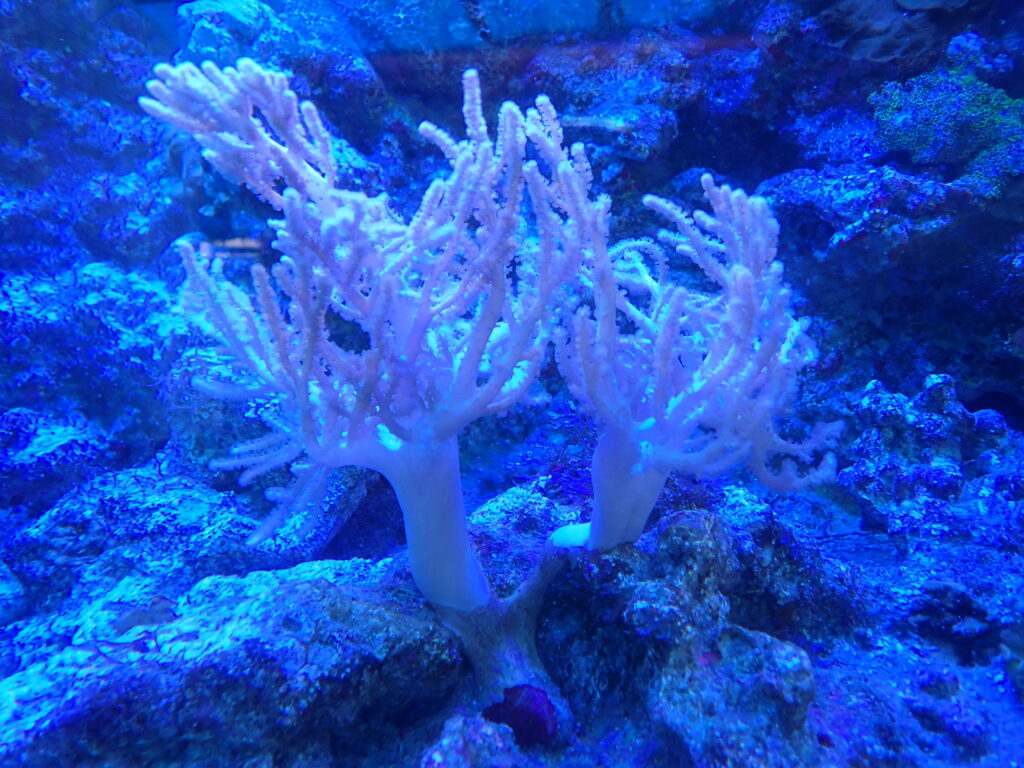
Coral reefs are more than just beautiful underwater ecosystems. They are essential for marine biodiversity, coastal protection, tourism, food security, and the livelihoods of millions of people around the world.
Although coral reefs cover less than 0.2% of the ocean floor, they support a remarkable diversity of marine life and provide valuable ecosystem services to communities worldwide.
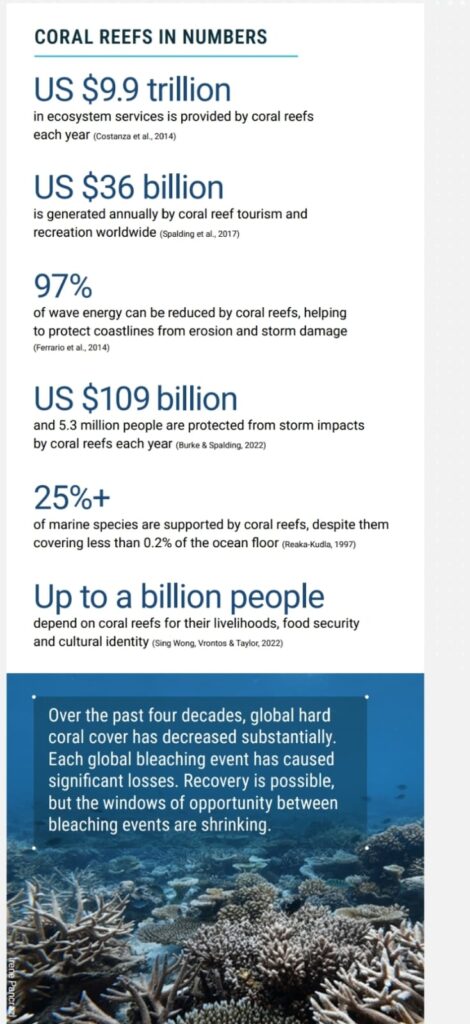
Source: Global Coral Reef Monitoring Network (GCRMN), with sources cited in the original infographic.
https://gcrmn.net/2025-report/?utm_source
Coral Reefs in Numbers
Here are some key figures that show just how important coral reefs are:
US$9.9 Trillion in Ecosystem Services
Coral reefs provide an estimated US$9.9 trillion in ecosystem services each year. These services include supporting fisheries, protecting coastlines, providing recreational opportunities, and contributing to the overall health of marine ecosystems.
US$36 Billion from Tourism and Recreation
Coral reef tourism and recreation generate approximately US$36 billion annually worldwide. Healthy reefs attract visitors through activities such as diving, snorkeling, and marine tourism, creating economic opportunities for coastal communities.
Up to 97% Reduction in Wave Energy
Coral reefs can reduce up to 97% of wave energy, helping to protect coastlines from erosion and storm damage. By acting as natural barriers, reefs can help reduce the impact of waves and storms on coastal areas and communities.
US$109 Billion in Storm Protection
Coral reefs provide an estimated US$109 billion in annual protection from storm impacts, while helping protect approximately 5.3 million people from the effects of coastal storms. This natural protection demonstrates that healthy coral reefs are not only environmentally valuable but also provide significant benefits to coastal societies.
More Than 25% of Marine Species
Coral reefs support more than 25% of marine species, despite covering less than 0.2% of the ocean floor. Their complex structures provide food, shelter, breeding grounds, and nursery habitats for a wide range of marine organisms.
Up to 1 Billion People Depend on Coral Reefs
Up to one billion people depend on coral reefs for their livelihoods, food security, and cultural identity. For many coastal communities, healthy coral reefs are closely connected to fisheries, tourism, local economies, and traditional ways of life.
Coral Reefs Are Facing Growing Pressure
Despite their enormous ecological, economic, and social importance, coral reefs around the world are facing increasing threats. Over the past four decades, global hard coral cover has decreased substantially. Repeated coral bleaching events have caused significant losses, while the time available for reefs to recover between bleaching events is becoming shorter.
Coral bleaching occurs when corals experience environmental stress, particularly unusually high sea temperatures, causing them to expel the microscopic algae that provide them with much of their energy and color.
While coral reefs can recover after bleaching, their ability to do so depends on the severity and frequency of these events. As bleaching events become more frequent, recovery periods are becoming increasingly limited.
Protecting Coral Reefs Means Protecting Our Future
The figures above highlight a simple but important message:
Coral reefs are essential to both the ocean and people.
Protecting coral reefs means protecting marine biodiversity, supporting coastal economies, strengthening food security, and helping communities become more resilient to coastal hazards. Conservation, restoration, sustainable management, and continued scientific monitoring are therefore essential to give coral reefs the best possible opportunity to recover and adapt to future environmental challenges. Every healthy reef represents more than a thriving underwater ecosystem. It represents a source of life, protection, livelihood, and hope for future generations.
📚 Source
The statistics and infographic presented in this article are based on the sources credited in the original infographic, including research by Costanza et al. (2014), Spalding et al. (2017), Ferrario et al. (2014), Burke & Spalding (2022), and Reaka-Kudla (1997).
For broader information on the current global condition of coral reefs, see:
Global Coral Reef Monitoring Network (GCRMN) & International Coral Reef Initiative (ICRI)
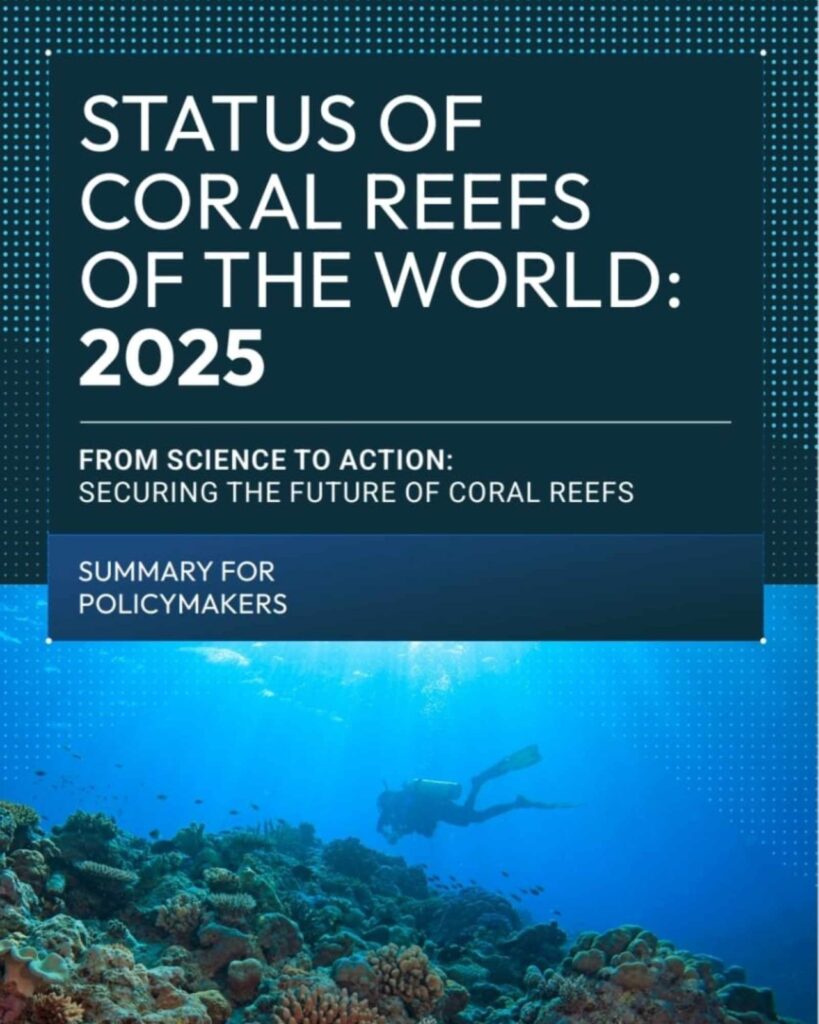
Status of Coral Reefs of the World: 2025